
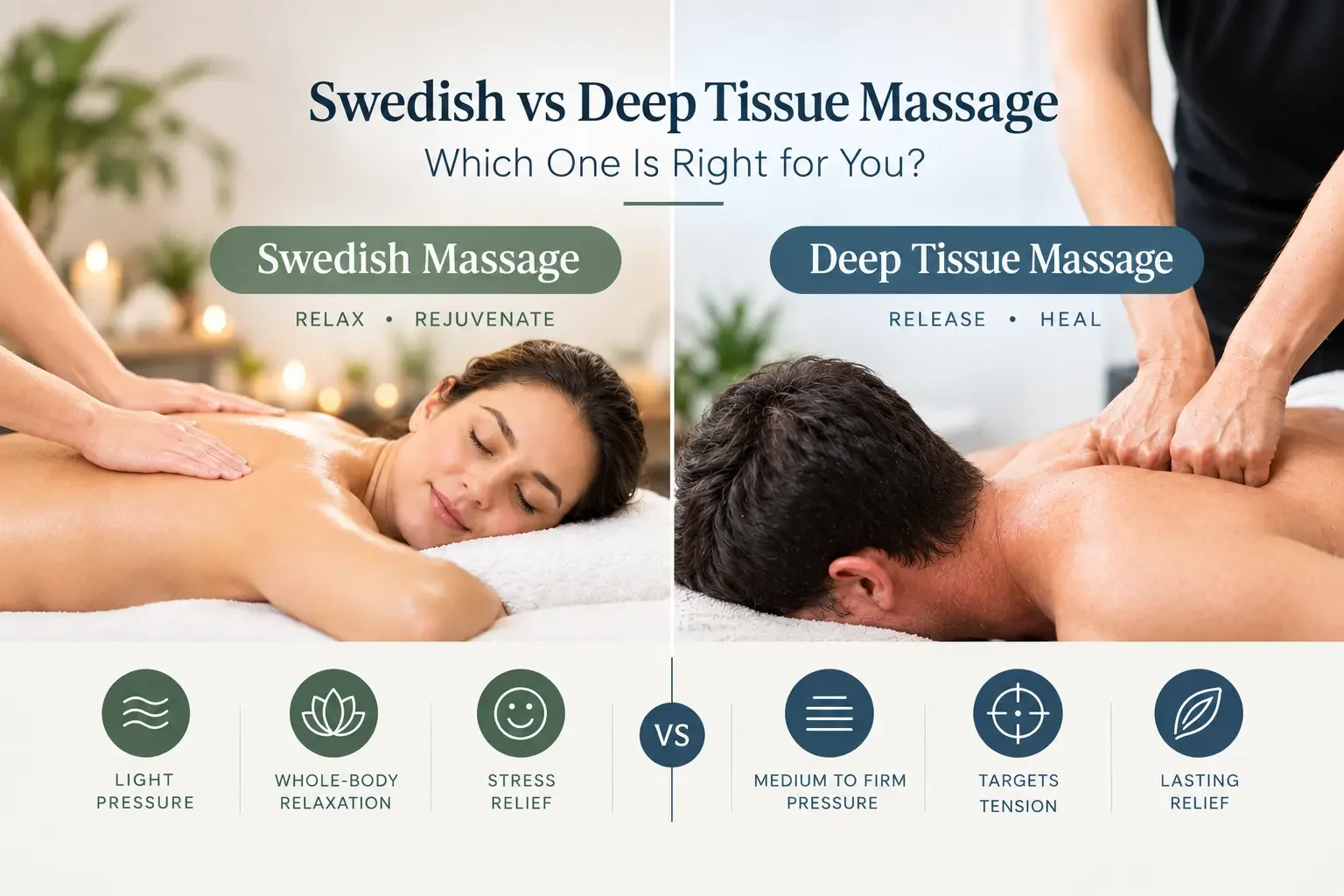
You have decided you need a massage. Great. Then you open the booking page and hit the first question: Swedish or deep tissue?
If you have ever stared at that choice and just picked one, you are not alone. Here is the plain-English version of swedish vs deep tissue massage, so you know what you are getting before you lie down on the table.
What Is Swedish Massage?
Think of Swedish as the "classic" massage. Long, smooth strokes. Gentle kneading. Some light circular work on the shoulders and back, usually with oil or lotion so the hands glide easily.
The pressure sits somewhere between light and medium. Nothing should ever feel like a fight. The whole idea is to slow you down and let your body switch off.
Swedish Massage Benefits
Most people book Swedish for one reason: to relax. After a rough week, it can take the edge off tight shoulders and leave you feeling calmer and lighter. That is really what Swedish massage benefits come down to: general comfort and an easier mind.
It is also a friendly first massage. If you are nervous, ticklish or just unsure, the gentle pressure makes it easy to settle in.
What Is Deep Tissue Massage?
Deep tissue is a different animal. The strokes are slower and the pressure is firmer, because the goal is to reach the deeper muscle layers and the connective tissue around them. Therapists often use thumbs, knuckles or forearms to get there.
It is also more targeted. Rather than giving your whole body equal attention, your therapist will spend most of the time on the spots that need it, like the neck, shoulders, lower back or hips.
Deep Tissue Massage Benefits
Sit at a desk all day? Train hard? Have one stubborn spot that never quite lets go? This is the style people usually reach for. Deep tissue massage benefits show up where the tension is stuck, not just in a general "ahh" feeling.
One thing worth clearing up: it should not hurt in a way that makes you hold your breath. Firm is fine. Painful is not. If it feels like too much, say so, and any decent therapist will ease off. You can see how we approach it on our deep tissue massage page.
Difference Between Deep Tissue and Swedish Massage
The difference between deep tissue and Swedish massage really boils down to three things: pressure, pace and purpose. Here is a quick side-by-side.
| Swedish Massage | Deep Tissue Massage | |
|---|---|---|
| Pressure | Light to medium | Medium to firm |
| Pace | Flowing and rhythmic | Slow and deliberate |
| Focus | Whole-body relaxation | Specific tight areas |
| Best For | Stress relief, first-timers | Ongoing tension and stiffness |
| Afterwards | Calm and loose | Worked, sometimes tender |
Neither one wins across the board. It depends on what you need today.
Which Massage Is Best for Stress or Back Pain?
Stressed out? Start with Swedish. The slow rhythm does a lot of the work for you, and you do not have to brace against pressure.
Back pain is less clear-cut because it depends on what is causing it. A dull, long-running tightness in the muscles often responds well to deep tissue. A general ache after a busy week might only need a Swedish session. So when people ask which massage is best for back pain, the honest answer is: it depends on the type of pain.
One important exception. If the pain is sharp, came on suddenly, or comes with numbness or tingling, see a doctor before booking anything.
Sports Massage vs Deep Tissue
People mix these two up all the time, and fair enough. They can feel similar. The real gap in sports massage vs deep tissue is the goal.
Deep tissue is about releasing tension that has been building for a while. Sports massage is tied to activity: getting ready for an event, recovering afterwards, or working the muscles your sport leans on most. If you run, ski, hike or lift, sports massage may suit you better. If you simply carry a lot of tension around, deep tissue is probably the better pick.
Sore After a Deep Tissue Massage? Here Is What Is Normal
It is pretty common to feel sore after deep tissue massage, especially after your first session or when a very tight area got extra attention. Most people describe it like the day-after feeling from a good workout. It usually fades in a day or two.
To help things along:
Drink water after your session.
Take a warm shower or bath.
Keep moving with an easy walk or light stretching.
Tell your therapist next time if the pressure was too much.
If the soreness is severe or drags on past a couple of days, check in with your therapist or a healthcare provider.
What About Muscle Knots?
Those tender little lumps in your shoulders and upper back? That is what most people mean by knots. If a muscle knots massage is what you are after, deep tissue is the usual answer, since slower, firmer pressure can go right where it is needed.
You do not have to choose just one, though. Plenty of therapists start with Swedish-style strokes to warm you up, then move into deeper work on the tight spots.
How to Choose the Right Massage
Still torn? Ask yourself three things:
What do I want most? Relaxation points to Swedish. Targeted relief points to deep tissue.
How do I feel about firm pressure? If you tense up easily, start lighter and build from there.
Is anything going on health-wise? Mention injuries, medications, pregnancy or medical conditions before your session starts.
Can not decide? Just tell your therapist how your body feels. They can adjust as they go.
Final Thoughts
Swedish is for calm. Deep tissue is for focus. Neither one is "better," so pick the one that fits how you feel right now.
And if getting to a studio feels like one more thing on your to-do list, Massage Artistry offers mobile massage in Jackson Hole. A licensed therapist comes to your home, rental or hotel, and the session is shaped around what you need: Swedish, deep tissue or a blend of both. Book your session today and tell us what your body is asking for.
